Record Interactions
Before you start
- The entity types involved.
- A lookup type holding the participant roles, if the interaction has several participants.
- The
interaction-type.createandinteraction.createpermissions.
1. Define the interaction type
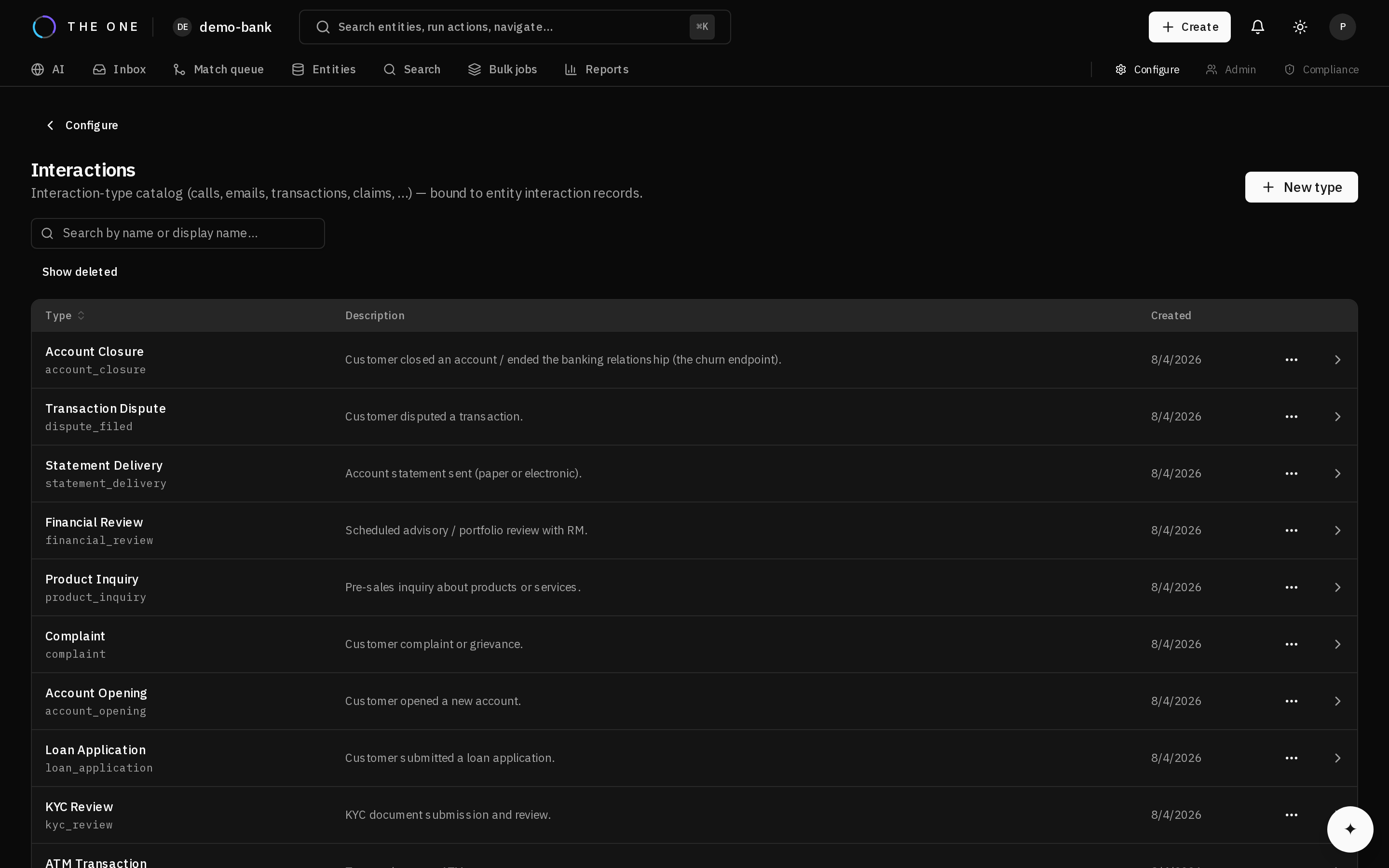 Interaction types. The participant role list bound here is what a recorded interaction may use.
Name the kind of event. Bind a participant-role list to it if interactions of this kind involve more than one entity.
Binding the role list is what keeps a timeline queryable. Without it, roles accumulate as free text and "clinician", "Clinician", and "doctor" become three different things.
2. Record an interaction
Give it a type, a status, and when it occurred.
Record when it occurred, not when it was loaded. A timeline ordered by load time is not a timeline.
3. Add participants
Each participant is an entity in a role drawn from the type's bound list. A role outside that list is refused, so the timeline stays consistent.
4. Read the timeline
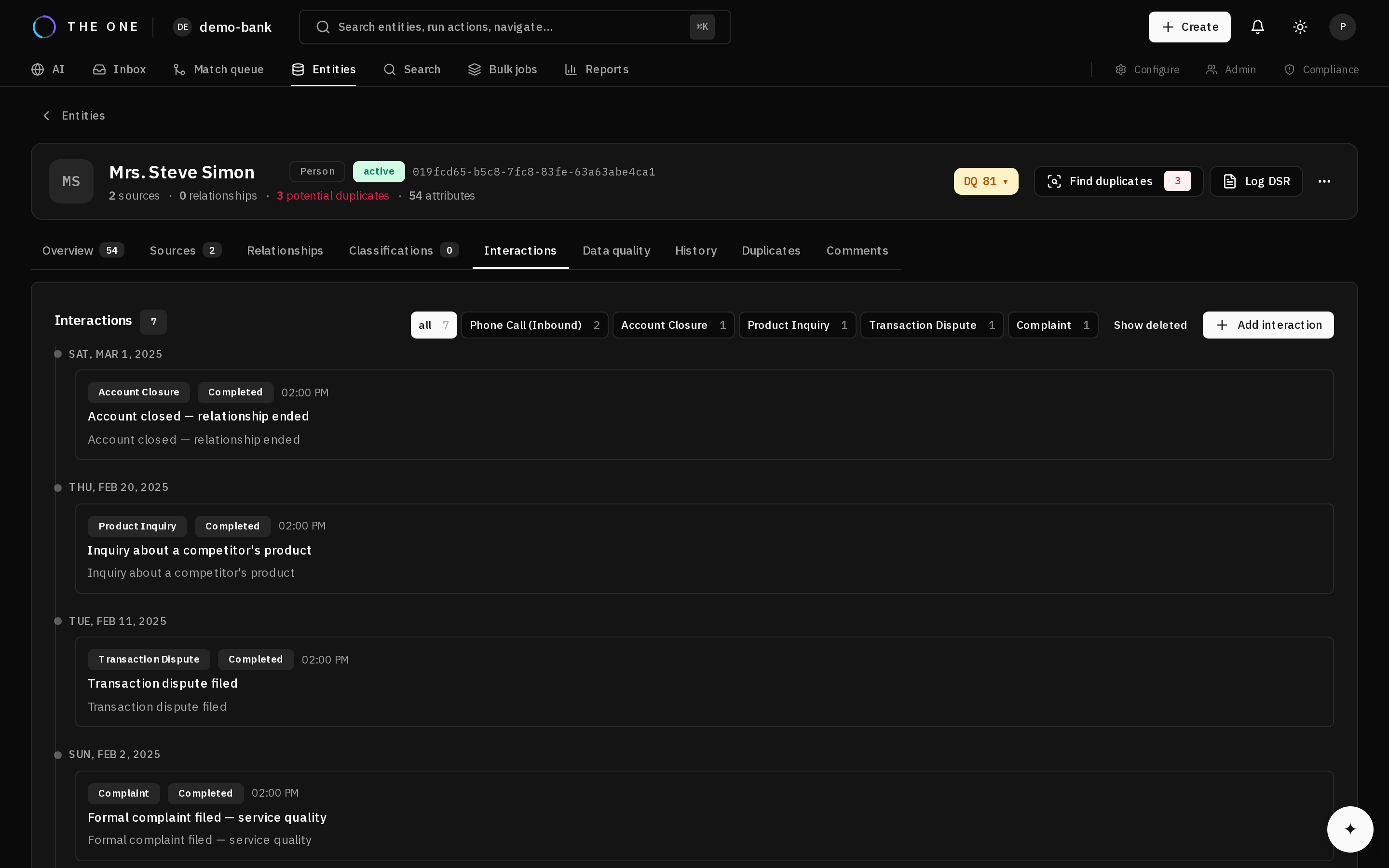 The entity's own timeline, grouped by day — the same interactions, read from one participant's side.
An entity's 360 view shows its interactions in time order, including those it participated in rather than was the subject of.
5. Understand merge behaviour
When entities merge, interactions move to the survivor and the timeline becomes whole. Where both records participated in the same interaction, the duplicate participation is collapsed rather than leaving the survivor listed twice in one event.
Unmerging restores the original arrangement.